ORAL HISTORIES
Each language is a way of experiencing the world
Oral histories are recordings of individuals telling stories about their lives and about events they have witnessed and experienced. They can be told as monologue narratives, songs or through interviews. Such first-hand accounts give people the opportunity to tell their own history. Being able to share their individual stories gives storytellers a sense of ownership and control and can be very empowering. It also promotes self-reflection and critical thinking.
Sharing these stories and diverse narratives instigates internal dialogue, discussion across borders, and can impact feed into cultural outputs, research and policy.
The stories and collections on this platform reflect diverse topics and communities that inhabit the city of Raqqa.
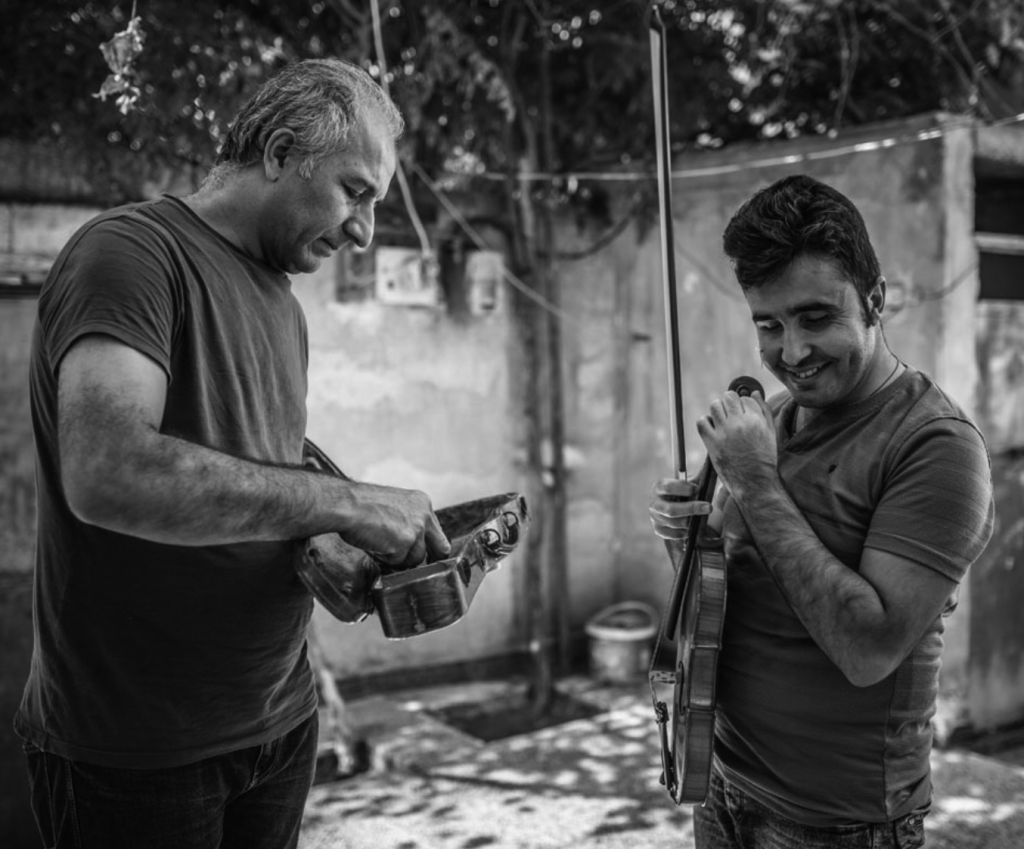
The project Return to Tenderness is born with the intention to open a window to the world; to everyone to see the ability of the citizens to listen, be heard and to engage in honest and inclusive exchange of cultural and music knowledge that has populated the land along the Euphrates river.
The contextual and historical influences on storytelling and story taking are critical features of the Middle East oral tradition that are often ignored or minimised in its history and as a form of archive.
Communities across the Middle East have been using stories as a form of education and a tool to transfer knowledge to younger generations. After the day’s work, mostly evening children would gather around the eldest family member —grandfather or grandmother—who would tell a story or a riddle or sing a song with the children.
Stories are the foundation of Middle East traditional knowledge. Despite the complex and often contentious history of Middle East storytelling, their oral traditions have not been explored to reveal the depth of their lived experiences and the way those experiences and knowledge inform the community and how it archives the society’s culture.